
The Hill Above the Fountain: Polop’s Castle, Its Literary Cemetery, and the Writer Who Wouldn’t Leave
Pull up a lounger and let’s head back in time, into the village of Polop.
Most people who drive inland come for the fountain with 221 spouts and a coffee in the square. Fair enough. It’s the photo stop. What almost nobody climbs is the hill straight above it.
I’ve already written about Polop here: Discover Polop: The Charming Inland Village and a little Antidote to Costa Blanca Chaos.
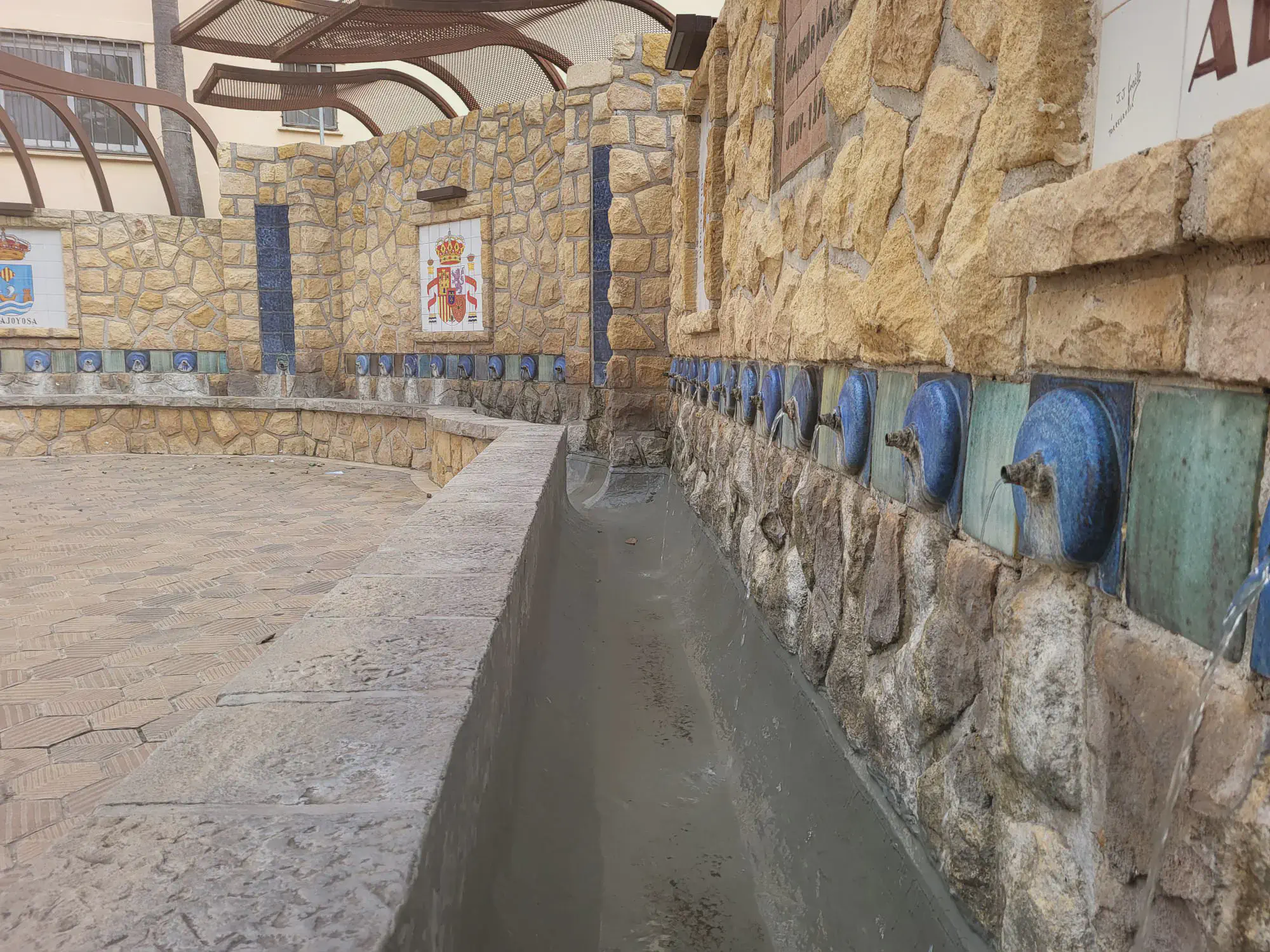
Up there are the ruins of a 12th-century Moorish castle. The walls are low now, the path is steeper than it looks from the square, and the views run all the way back to the coast. Somewhere along the way, the place stopped being just a fortress and became something quieter and stranger: an open-air cemetery where the graves carry quotes from writers instead of the usual names and dates.
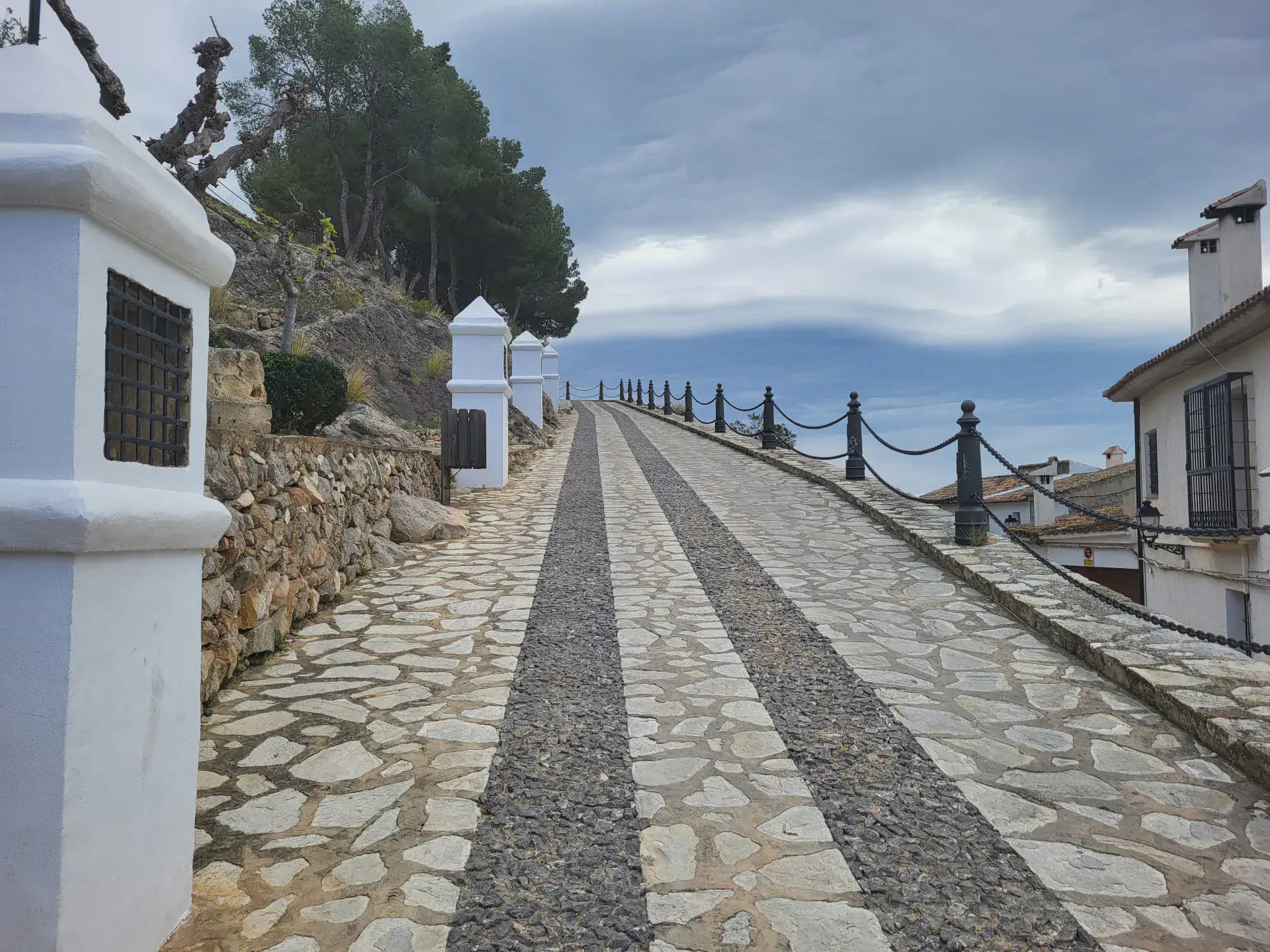
The climb
You leave the square and the water, follow the streets that tighten as they rise, and eventually the path opens onto the hill. It is not a long walk, but on a hot day you feel it.
People have felt that climb for millennia. Long before the Moors built their fortress, Iberian tribes stood on this exact summit 2,500 years ago, using it as a watchpoint to monitor the Guadalest Valley. The Romans and Visigoths followed, all drawn by the same strategic view.
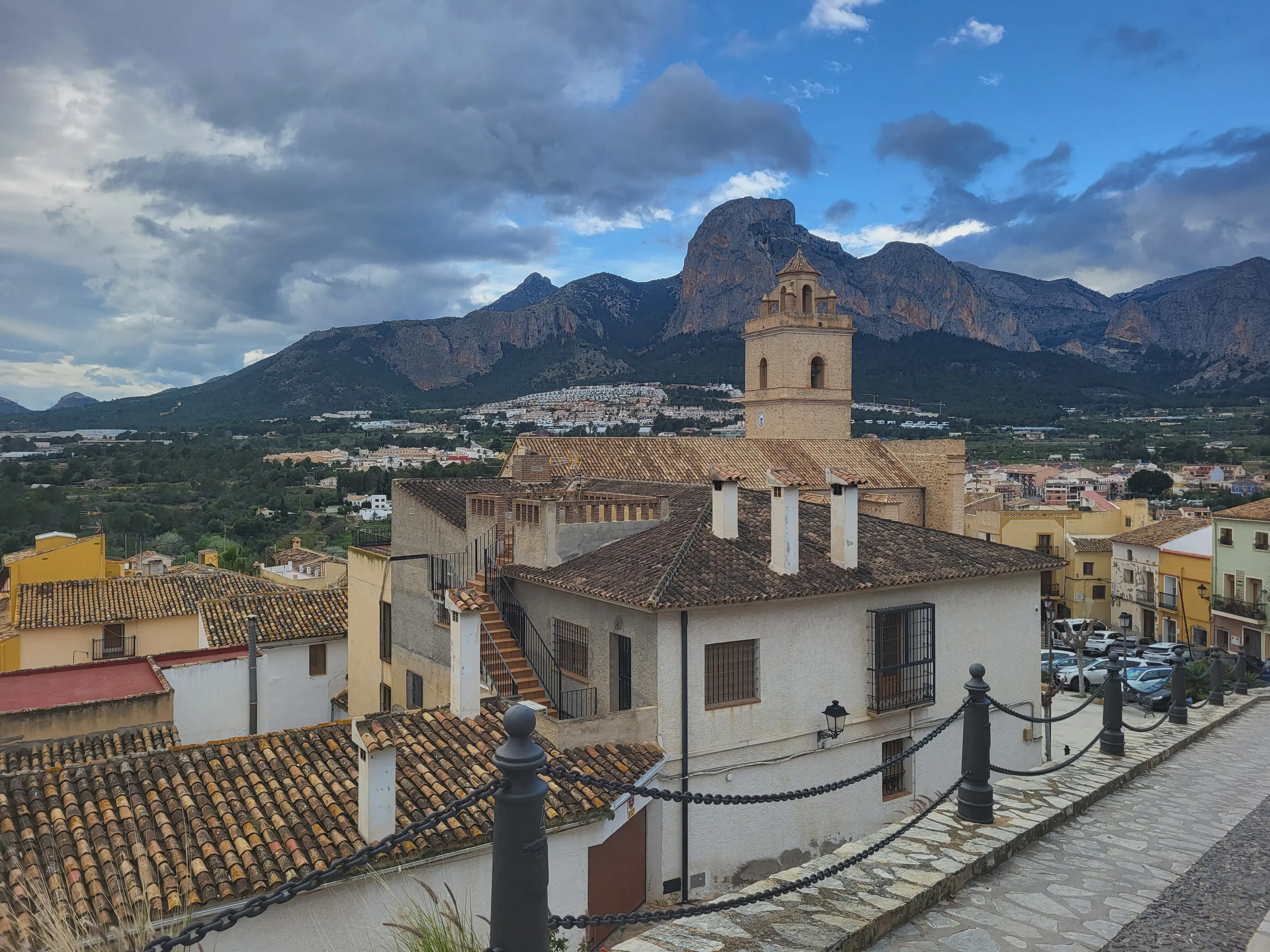
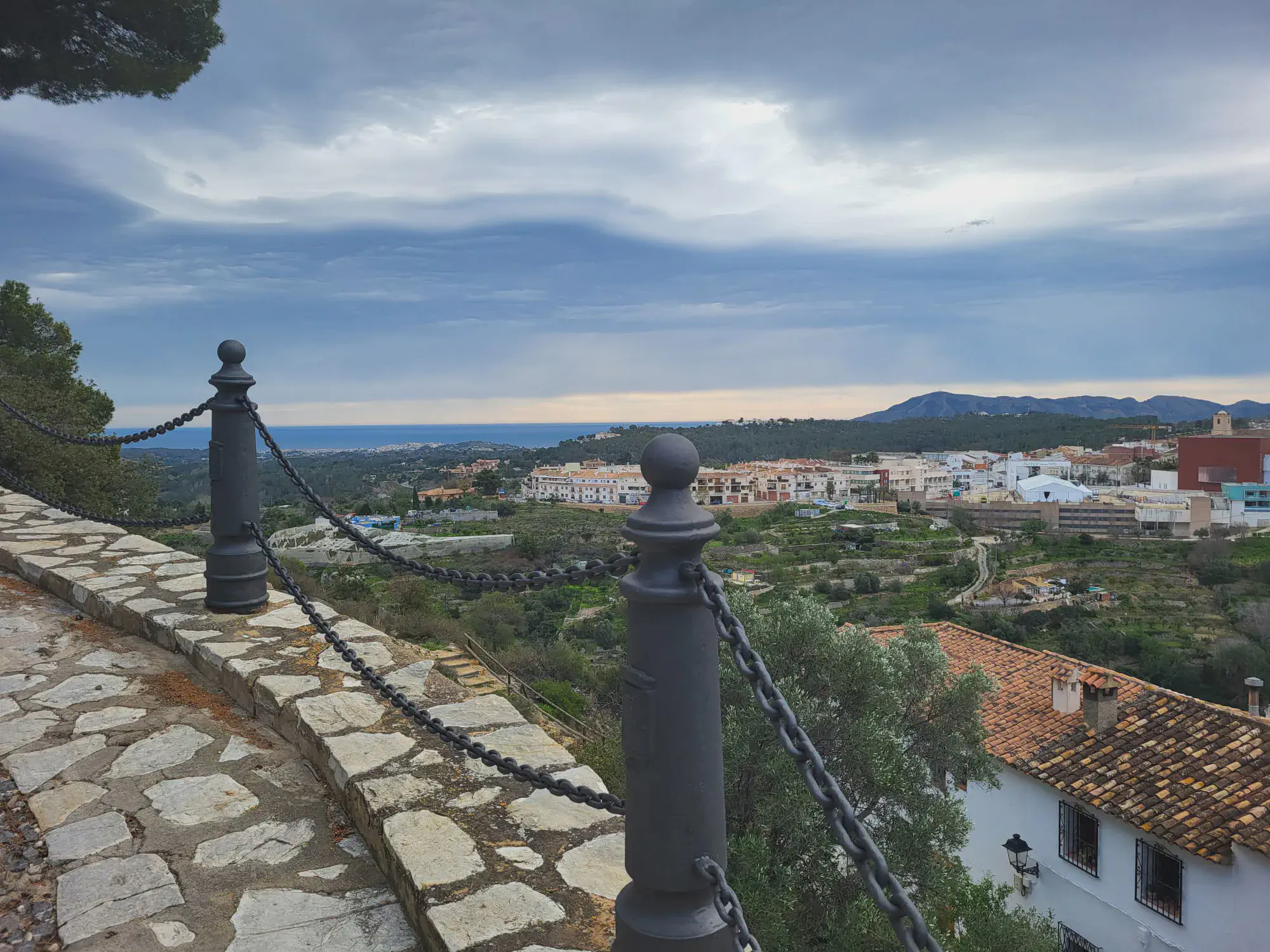
The higher you go today, the more the coast appears behind you, and the Sleeping Lion (Ponoig) sits in front. The castle ruins themselves are modest. What remains is low walls, a sense of the old outline, and the knowledge that this spot was chosen for a reason. From here you could see anyone coming across the valley or up from the sea.
From fortress to cemetery
The castle was strategic for centuries. In the late 11th century, the legendary warlord El Cid occupied this ground. By 1268, after the Christian Reconquest, King James I transformed it into the head of a powerful feudal barony. At different times, Polop ruled over coastal places now far more famous, including Benidorm and La Nucia. The village was the centre; the beach towns were just the edges.
But the hill’s history is stained with blood. In the early 16th century, during the brutal Rebellion of the Germanías, rebel fighters used the castle as a stronghold. Royalist forces eventually tricked their way inside, resulting in a horrific massacre of the local population on the summit. Less than a century later, in 1609, the Expulsion of the Moriscos forced two-thirds of Polop’s people onto ships overnight, leaving the castle hill to look down on a ghost town of empty homes and abandoned fields.
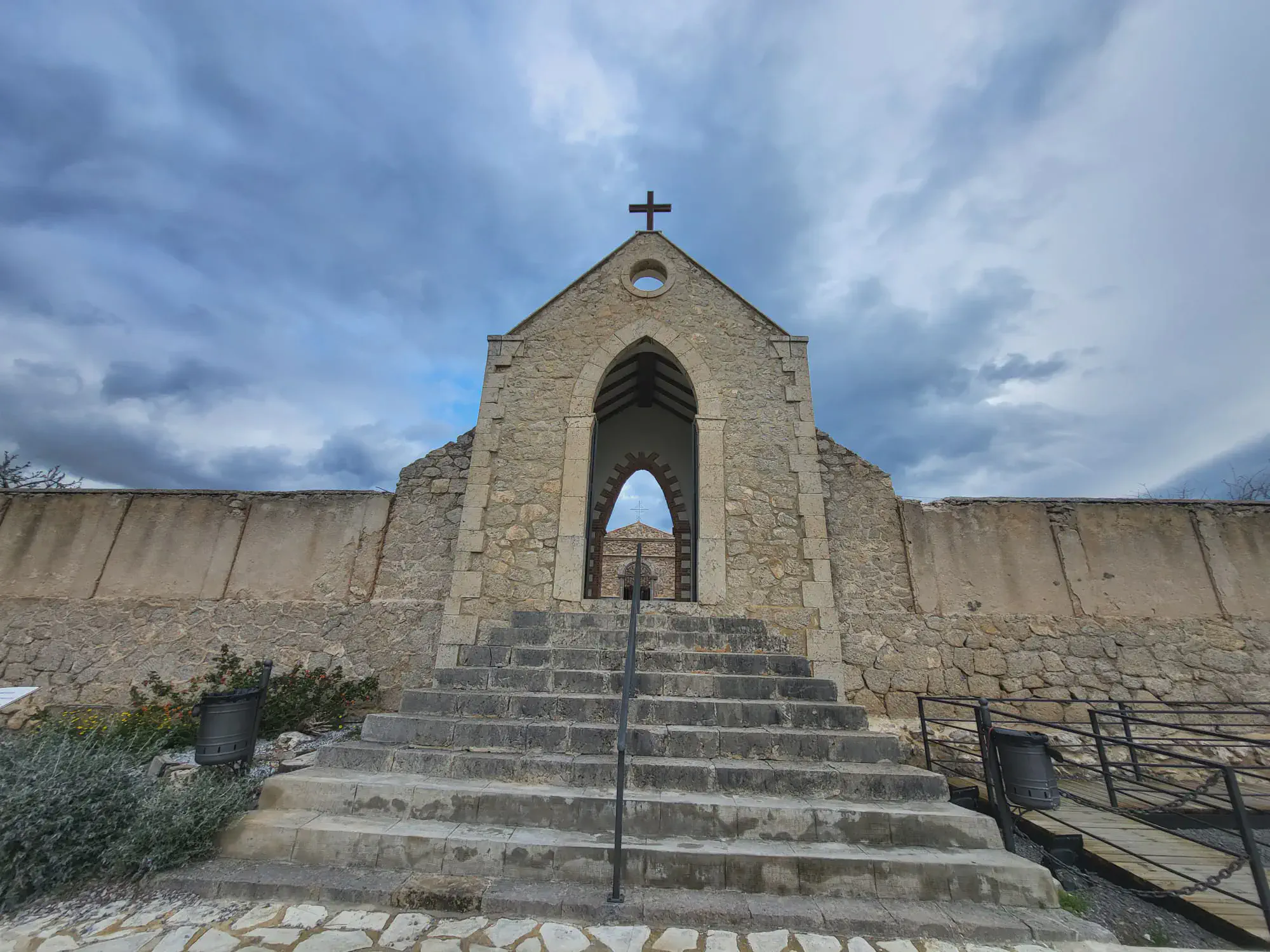
So, how did a blood-soaked fortress become a sanctuary for words? The answer is a 19th-century sanitary law. For generations, locals were buried beneath the village church. When Spain banned indoor church burials for public health reasons, Polop had no flat land left. They looked upward. They cleared the interior ruins of the old Moorish fortress, using the ancient medieval battlements as the graveyard’s exterior walls, creating the Cementeri Vell (Old Cemetery).
Later, someone decided the dead up there should be kept company by literature. Graves carry lines from writers rather than the standard inscriptions. It is odd, quiet, and, if you like that sort of thing, better than most of the polished heritage stops along the N-332. There is a small chapel as well. The photos I took inside show the people and the history that still sit up here: faces, names, and the sense that this was never just a viewpoint.
Gabriel Miró
Gabriel Miró didn’t live in Polop permanently, which only heightens his romantic obsession with it. He was a summer resident who spent eight consecutive summers here in the 1920s, writing about the village as an island in the mountains.
The hill and this very cemetery directly inspired his final masterpiece, Años y leguas (Years and Leagues), published in 1928. When the municipality restored the cemetery, they purposefully laid it out to mirror the exact melancholic, romantic atmosphere Miró penned in his book.
The village still has a small house-museum for him, free to walk into, and the hill above the fountain quietly keeps his company. He is not the only writer linked to the place, but he is the one the village has chosen to remember properly. The literary cemetery feels like a continuation of that choice: the dead up here are not left without words.
Why it is still hard to find
It is not a big tourist attraction. You have to want to go up. There are no queues, no timed tickets, no laminated English menus at the top. On a clear day, the coast is right there. On a cloudy one, the hill feels even more like it belongs to the village rather than to visitors. I first went up because the fountain was busy and the path looked empty. I stayed longer than I meant to; it was very emotional, and I will return hopefully on a sunnier day
The water down below is the thing everyone photographs. The hill is the bit that explains why the village is still there, why it once mattered enough to head a barony, why a writer stayed, and why a sanitation law ultimately transformed a site of ancient battles into a terrace of poetry instead of silence.
If you’ve been up and spotted a particular quote, or if you’ve got another inland story that barely gets told, drop it in the comments. I’m collecting the ones that are still hard to find.
Next time you’re looking for somewhere to go, put Polop on your list; you won’t be disappointed.
Joanne xx
I’m Joanne from Sun Sea Sangria — the Terrace Crew’s notes from the Costa Blanca North. Real life from Alicante up to Dénia: local spots, practical bits, and the older stories that sit under the sangria. No brochure.
If you want the next one straight to you, subscribe free here .
Like or comment if this was useful — it helps more people find the round-ups.
While you’re here:
- Free guides from the terrace → sunseasangria.com/free-expat-resources
- Snoopy’s book, Paws & Mischief → Amazon UK or Amazon.com
See you next time. The terrace is open if you need it.
Joanne xx
Sun Sea Sangria
Comments
Loading comments...
Leave a comment