
Two Novembers on the Same Mountain
What the Civil War did to ordinary families between Dénia and Xàbia,and why a stone cross and a cemetery wall still matter
Pull up a lounger.
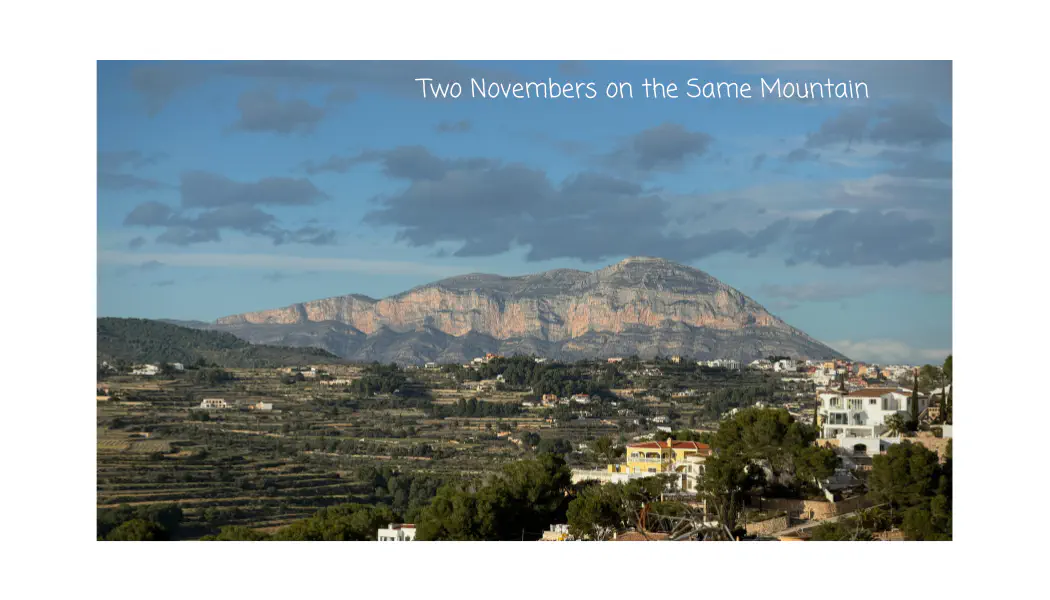
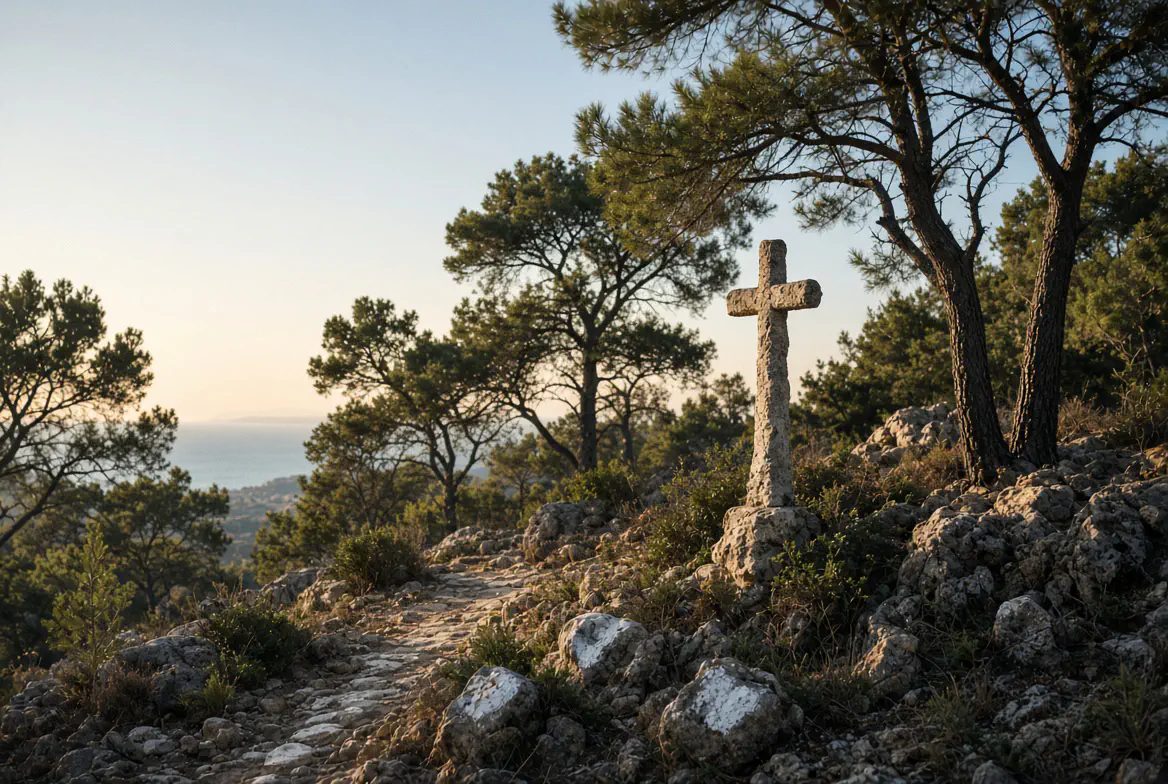
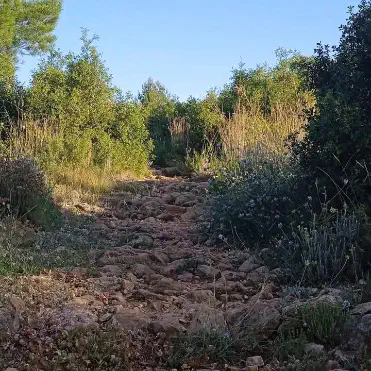
If you drive the high road between Dénia and Cap de Sant Antoni, you pass a place most visitors never notice. A narrow path marked with white-painted stones. A few hundred metres on, among pines that have grown back after fire, there is a stone cross.
It is not a viewpoint. It is not a picnic spot. It is where this coast learned how quickly neighbours can become lists of names.
I have lived here long enough to know we talk easily about pirates and fiestas and the price of tomatoes. We talk less about November 1936 and November 1939. Derek Lambert touched it in Spanish Lessons, men and women taken to the cliffs. He was not making it up. He was brushing against a wound that families here still carry, even when they do not say the words out loud.
This is that story. Both sides of it. Because pretending only one kind of cruelty happened on this mountain is another kind of forgetting.
The summer the rules fell off
The Marina Alta stayed on the Republican side of the war. There was no front line crashing through Calpe or Jávea. That did not mean peace. It meant something more intimate: fear inside the same streets.
After the coup of 18 July 1936, Dénia had two powers at once. The town hall, Mayor Salvador Beltrán, a carpenter, socialist, president of the Casa del Pueblo, issued edicts asking for calm. At the same time, armed groups moved outside the law. Historians call one of them La Pepa: militiamen, many linked to the CNT, who took people on paseos,“walks” that did not end at home.
On 16 August, feast of Sant Roc, twenty-seven prisoners were put on a train to Alicante to face the Popular Tribunal. Rosa Seser, who runs Dénia’s municipal archive, has said that the train probably saved their lives. News of the Badajoz massacre had arrived. Revenge was in the air. Most of those men later walked free. One who came back anyway, Alfonso Morales, was killed days later.
The killings that did happen were not a tidy army action. They were local. A student falangist. A court secretary. A judge who was himself a Republican. A vicar murdered in Gata. An industrialist. In the records there is even one woman, Isidora Sánchez. Teresa Ballester, who has spent decades on this history, has counted dozens of people from Dénia killed on roads and tracks across the comarca in those first months. Fathers and sons from Ondara were shot together in Benissa’s term. Priests. Farmers. People whose “crime” was a party card, a farm, a collar, or a neighbour’s grudge.
Plenty of Republicans were sickened by it. The socialist Juan Bertomeu wrote of hooded men marching out in silence, and of a wife saying goodbye. The official town wanted courts.
The deadly Mountain history
On 2 November 1936, fifteen people were taken from Dénia’s municipal lock-up. No trial. A truck. Up onto La Plana, on the Xàbia side of the Montgó, barely 130 metres from the road that still runs toward the cape.
There is a shaft in the limestone, l’Avenc, dropping close to seventy metres. They were shot at the edge. The bodies went into the dark, truly horrific.
Numbers in the old papers wobble between thirteen and twenty-one. The figure that keeps returning is fifteen. Landowners, a lawyer, a sea captain, shopkeepers, a student, farmhands. Some of the men thrown in that night were not even from the political right: a labourer, a worker, caught in the same net. Later cavers found bones mixed with shoes, belts, a shotgun, scraps of clothing. There are accounts, hard to prove and harder to forget, that not everyone died at once.
When the war ended, the hole was sealed with concrete. In 1953, speleologists from Alcoy broke through and saw what the mountain had been asked to hide. Decades later, people from Xàbia went down again with the town archaeologist. Then the shaft was closed once more. A wildfire in 2014 stripped the trees and left the cross standing in the open.
Families used to come quietly with flowers. A grave with no bodies to dress. Grandchildren who grew up knowing only that el abuelo no volvió.
If you go, go softly. It is not content. It is someone’s last road.
The years in between
War did not pause for grief.
Dénia’s toy workshops turned to metal for the Republican army. Italian aircraft flying from the Balearics hit the town again and again, more than thirty raids. Sailors died in the harbour when a French merchant ship was sunk in June 1938; five of them lie in Dénia’s cemetery, three of them French. Xàbia was bombed less, but the coast grew bunkers and machine-gun nests along the Montañar, most of them later eaten by apartments and the sea. People queued. People hid. People informed. People kept their mouths shut so their children could eat.
That is the part holiday Spain never puts on a tea towel. Ordinary life, held together with string, while the mountain kept its secret and the prisons filled.
The other November
April 1939. The Republic collapsed. The winners came down the same roads.
Dénia became a holding centre for the whole comarca. Hundreds were jailed. Councils of war sat in the room that is now the town hall’s plenary. The prosecutor asked for death again and again. In October and November 1939, over a few days, fifty-two Republicans were shot against the cemetery wall in Dénia.
Among them were three socialist mayors: Salvador Beltrán of Dénia, the same man who had tried to keep order in 1936, Jeremías Andrés Morales of Pedreguer, and José Ordines of Xaló. Aquilino Barrachina, mayor of Pego, was shot later in Alicante. The dead were labourers, drivers, barbers, electricians, clerks. Not monsters, just men and neighbours.
The wall still shows the pockmarks.
Last November, at the annual homage, María Victoria stood there as the names were read. Her grandfather was Jeremías, the mayor of Pedreguer. After they shot him, she said, they gave her grandmother and her father, then seventeen, twenty-four hours to leave the house. The Falange made a barracks of it. “Nos lo quitaron todo.” They took everything from us.
That is what “after the war” meant here. Not only a grave. A front door that was no longer yours. A job gone. A silence that lasted until the grandchildren were old enough to ask.
Across the Marina Alta, the Francoist repression after 1939 ran into the thousands of files, prison, exile, firing squad, the slow punishment of being marked. Ballester has always been careful with the sums: the illegal killings of 1936 in this comarca were real and they were fewer; the machinery of 1939 was larger, official, and it went on. Both things can be true. Both things were true.
What it did to families
This is the part that does not fit in a monument.
I really cannot get my head around how we humans can do this to one another, yet history shows this time after time. A woman who never knew whether to light a candle for a husband in the trenches or to hope he had somehow walked to France. Children told not to say the name at school. A priest’s family packing a bag at night. A socialist’s widow selling the tools from the workshop because nobody would hire her. Brothers who had voted differently and never sat at the same table again. Mallorcan families who had come after the Morisco expulsion, three centuries earlier, now watching another emptying, not of a faith this time, but of a generation.
Xàbia has its own list: people from the town killed by one side or the other, a young man on the Teulada road, a priest on the Benissa road, later men who died in Franco’s prisons or in the camps over the French border. Eighteen names in one local tally. Multiply that by every village from Pego to Calpe, and you start to understand why older people here still change the subject when the war comes up over coffee.
Silence was not always cowardice. Sometimes it was how you kept the rest of the family alive.
Why tell this history on my blog?
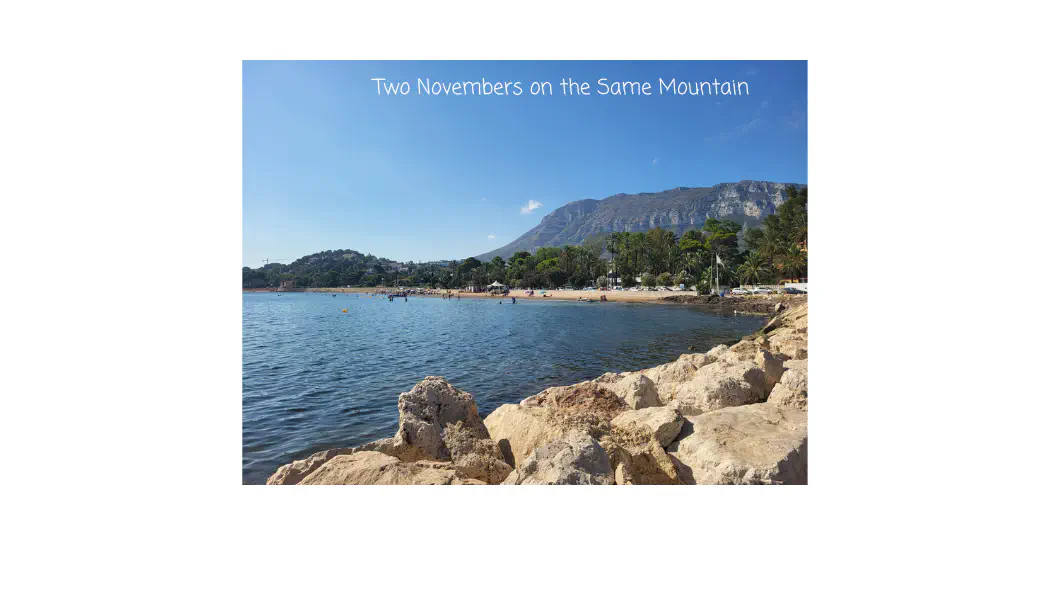
Because the road is still there. Because the cross is still there. Because the cemetery wall is still there. And because this coast sells itself as sun, sea and sangria, which it is, while under the beaches and bars there is an unknown history to many.
I am not interested in using the dead as a flag. The men who threw neighbours into a hole were not heroes. The men who shot mayors against a cemetery wall after paper “trials” were not restorers of order. The families who laid flowers in both places were the same kind of people you pass in Mercadona or on the market days.
If you write about pirates taking Calpe in the 1600s, you can stop at the drama. If you write about 1936 and 1939, you have to stop and think, “that’s not long ago”. Someone’s grandfather did not come home. Someone’s house became a barracks. Someone’s mother said, for forty years, no preguntes.
That is local history too.
If you walk up from the junction of the Dénia road and the cape road, follow the white stones, and you find the cross; stand a minute. Then, if you are in Dénia in November, the cemetery wall has its own quiet gathering. Two Novembers. Same mountain. Same comarca. Different uniforms.
When the law leaves town, the neighbours are the ones who pay.
We can love this coast and still tell the truth about it. In fact, that is the only way the love is worth anything.
See you Friday, if the newsletter finds you. If you have a family story from these years that you want kept with care — not as gossip, as memory — you know where the terrace is.
Joanne
Sun Sea Sangria Sun Sea History - Costa Blanca North through the past
Don’t forget the Friday Terrace Newsletter — free, every Friday. Pull up a lounger and subscribe at sunseasangria.com.
Notes & sources
This is not a history book. It’s a little piece, written from what I have been able to look up and from living on this coast.
I first read this story in Derek Lambert’s Spanish Lessons. He mentions men and women taken toward the cliffs. He was not writing an academic study. He was a writer living here, touching a wound families still recognise. I have not copied his pages. I used that book as a start, then went looking.
The local work that holds the facts together belongs to other people:
- Teresa Ballester Artigues, especially her research on the Republic, the war and the repression in the Marina Alta (including her essays in Aguaits)
- Rosa Seser and the Arxiu Municipal de Dénia
- Memorials at l’Avenc on La Plana and at Dénia cemetery
- Reporting and public talks in La Marina Plaza and other local papers when the shaft was opened, when plaques were placed, and when names are read each November
- Family testimony given at the cemetery homage — including María Victoria speaking about her grandfather, Jeremías Andrés Morales
Where numbers disagree, I have left them disagreeing. The Avenc dead are listed as 13 on one plaque, 15 in later archive work, and up to 21 in older Franco-era notices. The cemetery wall is remembered as about fifty people; some counts say 49, others 51 or 52.
Some details in wartime memory are hard to prove: who exactly was in the truck, whether anyone survived the fall for a time, which neighbour informed on which neighbour. I have marked those as accounts, not as courtroom fact.
I am not a historian. I am very interested in all history from England to Spain, who happens to have a blog. If a family wants a name added, corrected or left in peace, that matters more than a tidy Saturday post. Write to the terrace, and I will change any piece into facts.
Further reading if you want the serious work, not mine: Ballester’s studies; the Dénia municipal archive; the Comunitat Valenciana map of Civil War graves; the yearly gathering at Dénia cemetery each November.
Joanne xx
Comments
Loading comments...
Leave a comment